
Mature the technology
Advance from laboratory proof through continuous-flow pilots to industrial demonstration, with each phase creating a bankable data package for the next.

Salacia’s development is organized as a phase-gated industrial plan — each stage designed to create a distinct maturity jump before the next capital-intensive step is launched.
Establish marine biomass as a financeable, scalable pillar of the energy transition.
Each objective is pursued in parallel — technology, supply, certification, and commercial — so that no single workstream becomes a late-stage bottleneck.
Advance from laboratory proof through continuous-flow pilots to industrial demonstration, with each phase creating a bankable data package for the next.
Structure a resilient supply chain spanning collection, cultivation, and logistics — anchored in coastal partnerships, starting with the French Departments of the Americas (DFA).
Establish sustainability and product certifications progressively, moving from technical evaluation to compliant non-aviation sales and, in time, qualified aviation routes.
Convert industrial demonstration into a first large-scale platform, then replicate the model into new territories with adjacent sustainable product lines.
Six phases structure Salacia’s journey — each defined by a clear technical target, a commercial status, and a maturity gate before the next phase is unlocked.
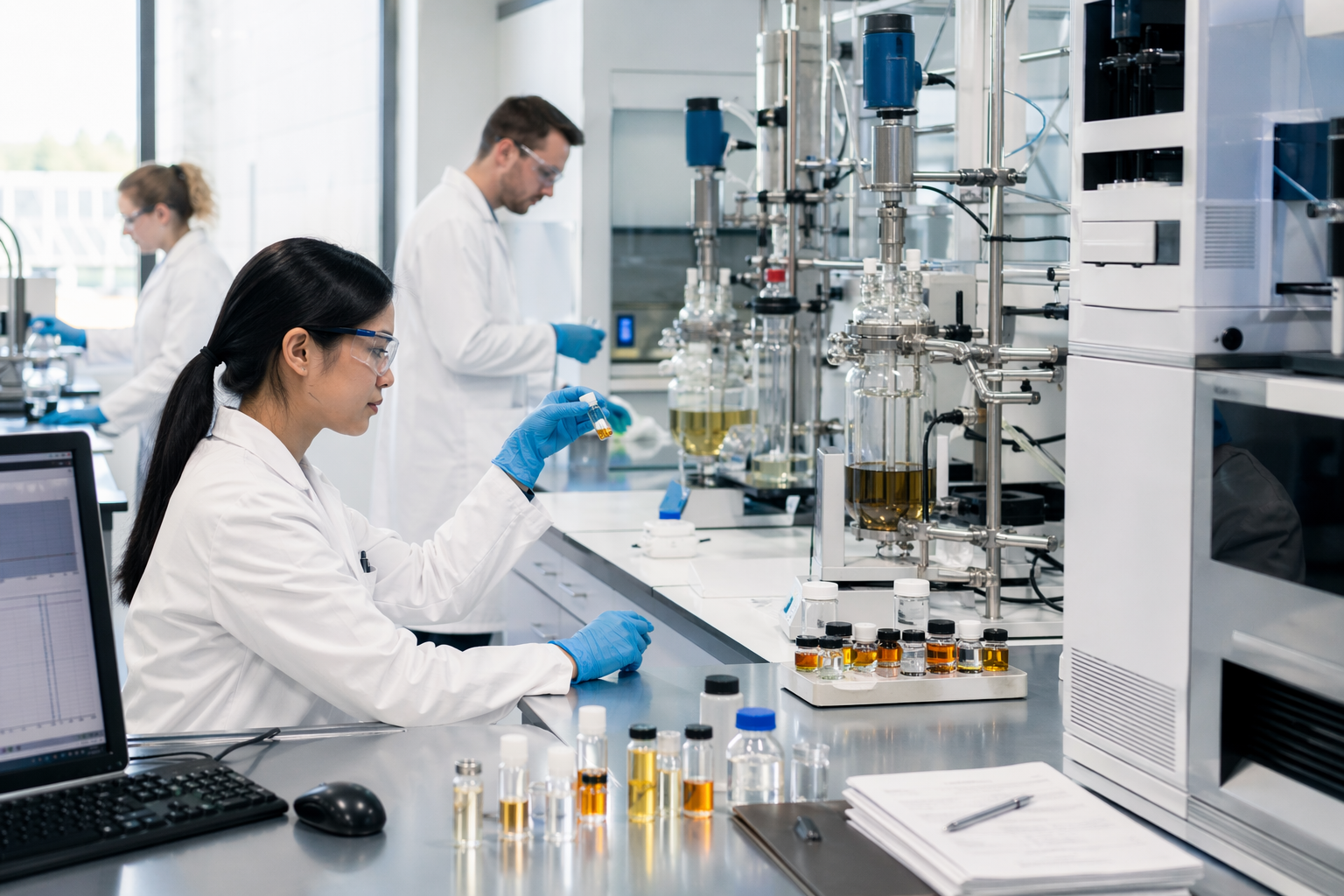
Establishing integrated process chemistry and producing the first renewable fuel samples under laboratory conditions.
Transitioning from batch chemistry to continuous-flow operation on standardized marine biomass.
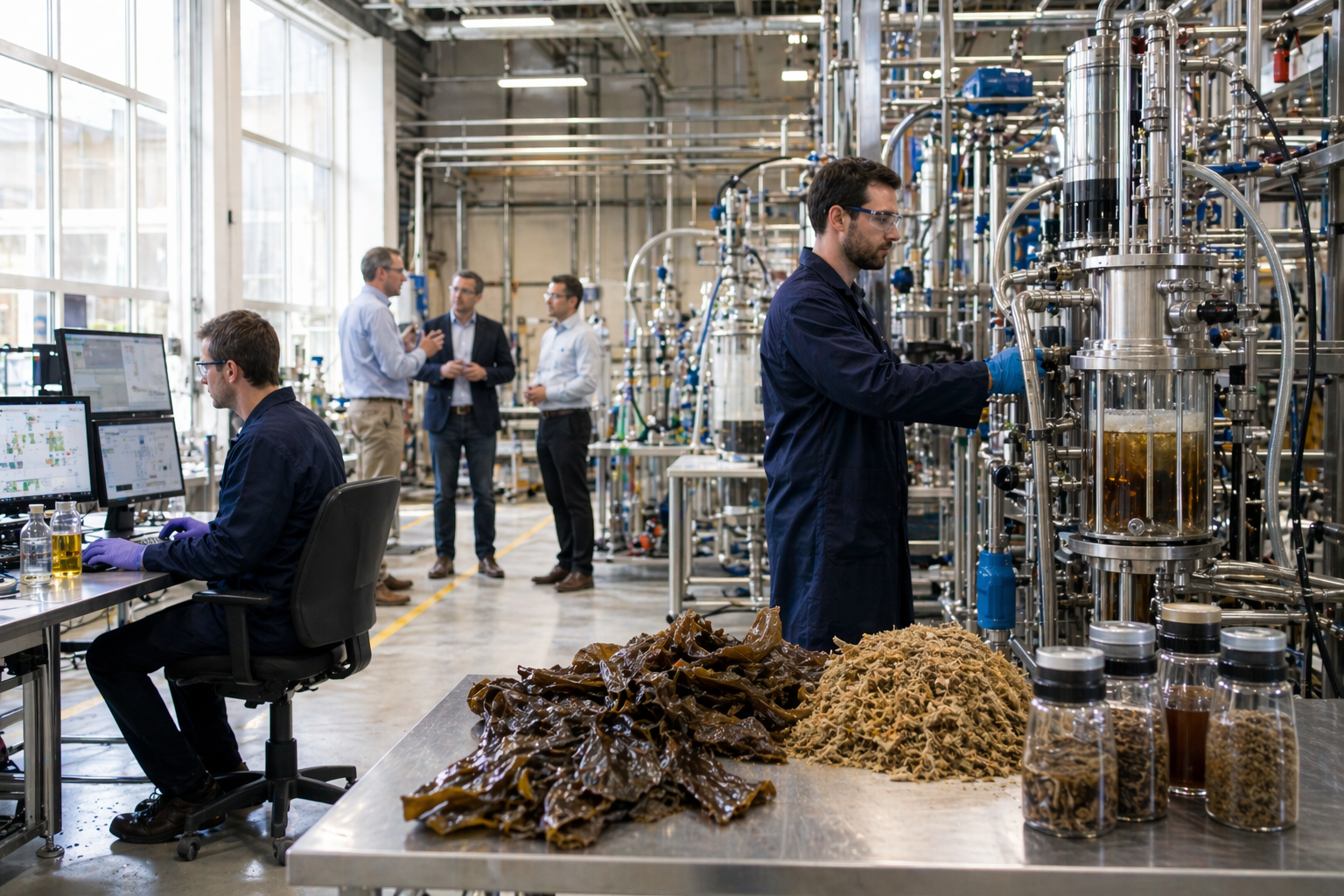
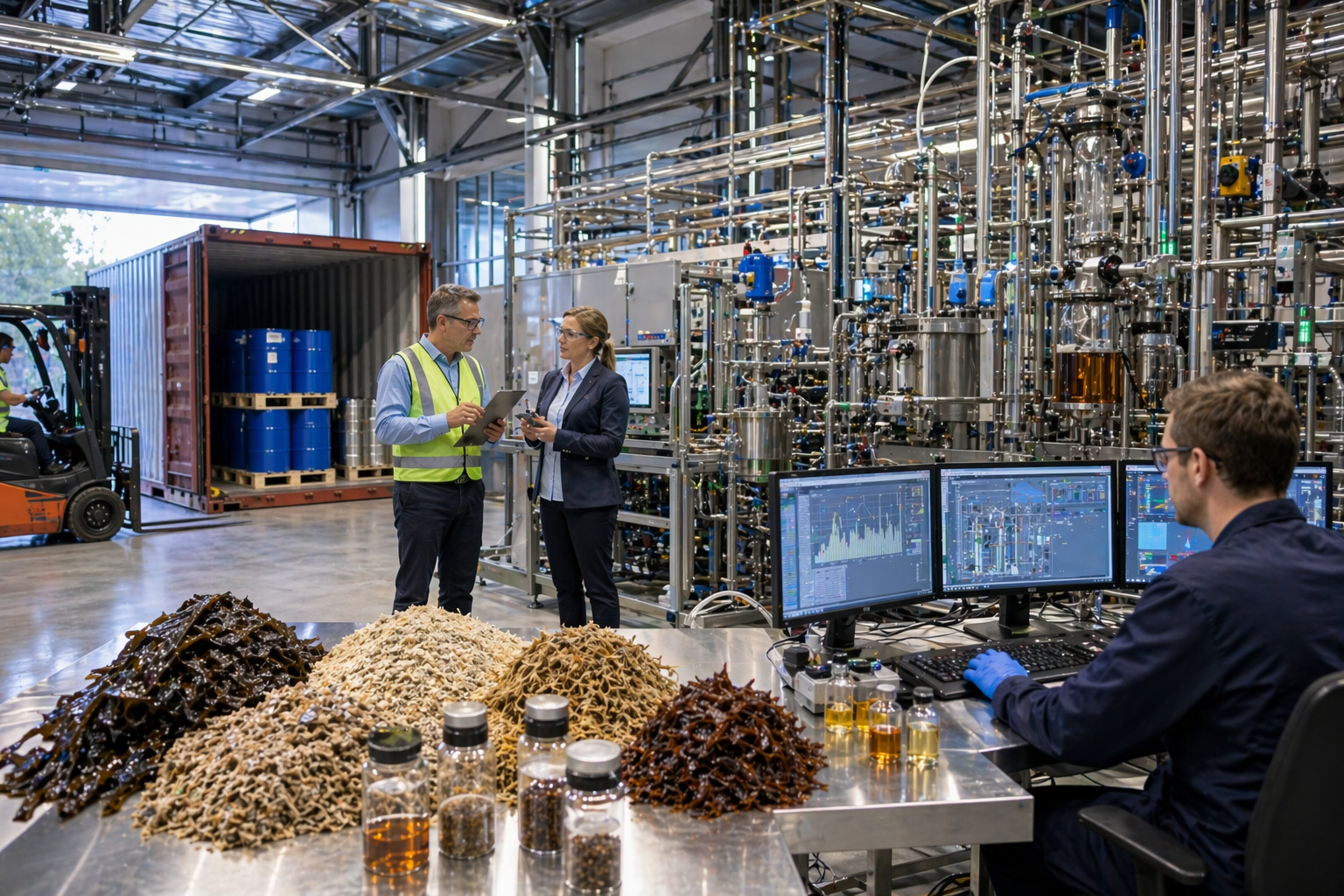
Automated operation on variable biomass, first sustainability certifications, and recurring pilot deliveries to selected partners.
Building and operating the first coastal industrial demonstration unit, integrated with local collection and logistics partners.
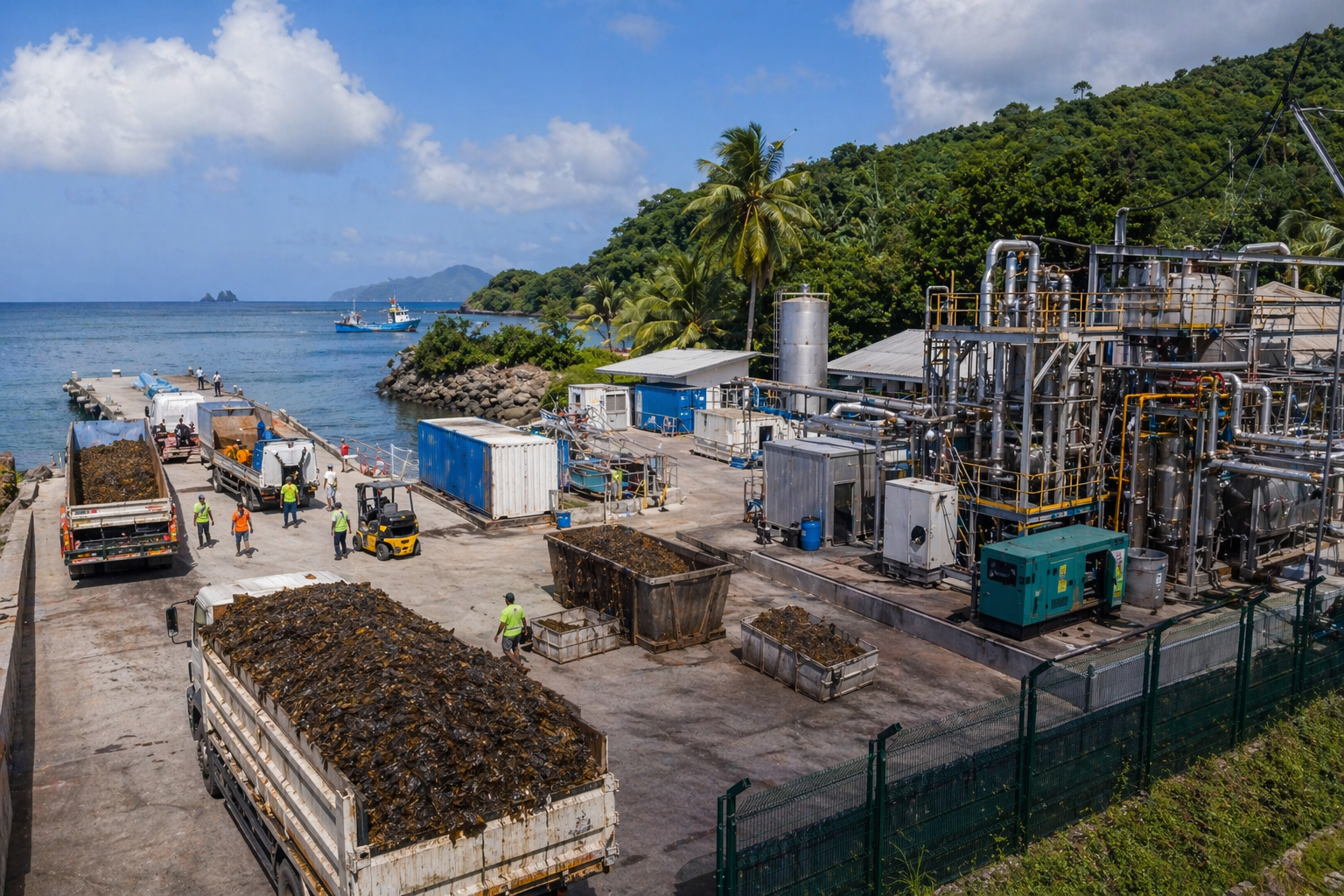
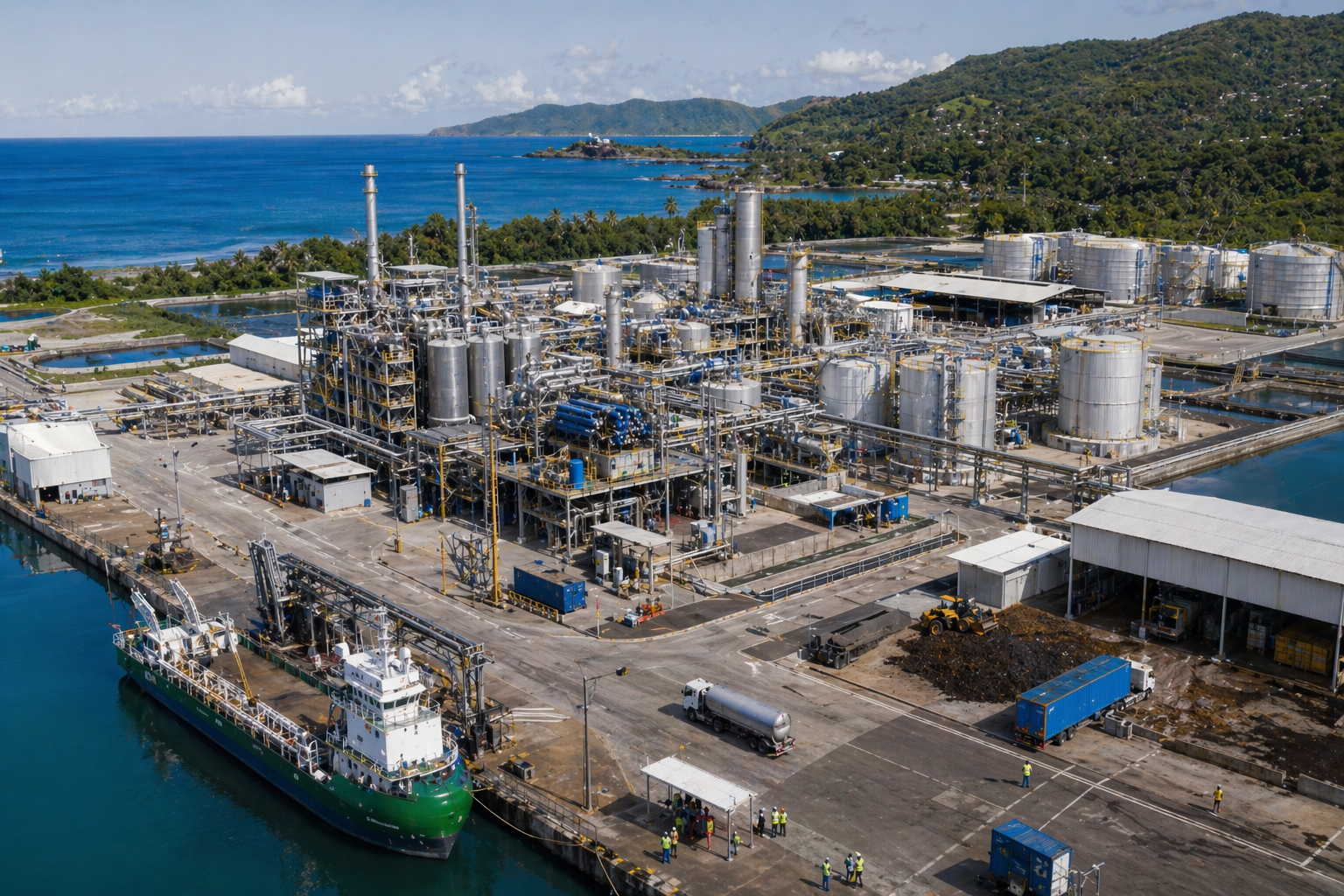
Deploying the first large-scale commercial platform with the validated technology and integrated large-scale supply model.
Replicating the industrial platform across new geographies and opening adjacent sustainable product lines.
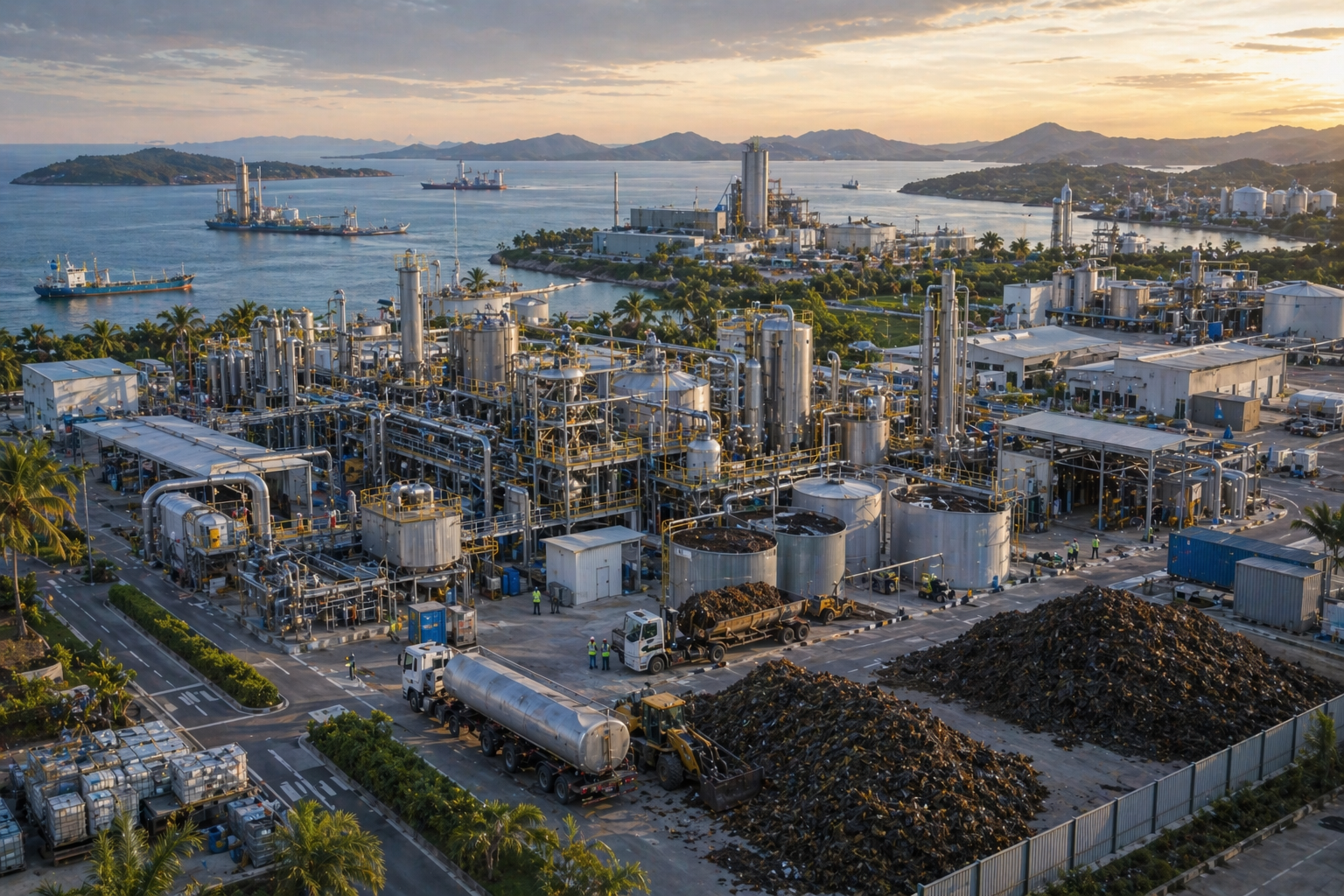
Each phase ends with a complete technical and commercial data package designed to support the next capital round — moving step-by-step from laboratory proof, to continuous pilots, to a coastal industrial demonstration, to a first large-scale platform, and ultimately to replication.
Commercial sequencing follows the product pathway rather than a generic claim that every stream can be sold immediately. Each status has its own qualification timeline.

The conversion process yields distinct liquid fractions — bio-crude precursors, aqueous phase co-products, and solid residues — each with potential market pathways across aviation, maritime, and road transport.
Delivered under technical, testing, or research agreements — not open-market sales. Builds qualification data with partners.
Diesel-like, marine, and gasoline-adjacent routes enter commercial sales as soon as product and sustainability conditions are met.
Treated as a premium long-term route through approved pathways — developed in parallel but not claimed prematurely.
Technical excellence must be matched by regulatory alignment. Salacia integrates certification and compliance into its development roadmap from the earliest phases.
Reaching commercial markets requires more than technical proof. Salacia’s roadmap integrates certification pathways, regulatory alignment, and standards compliance from early development — ensuring outputs can meet the requirements of aviation, maritime, and road fuel specifications.

We’d be glad to discuss collaboration, industrial partnerships, offtake opportunities, or investment — at any phase of the roadmap.
Start a conversation