
Energy demand
Economic development requires abundant, reliable energy. Fossil fuels still dominate that demand despite their environmental cost.

Salacia’s process is built around one constraint most biofuel routes avoid: a wet, variable, marine feedstock. This page explains the feedstock, the conversion step, what comes out, and how it reaches regulated fuel markets.
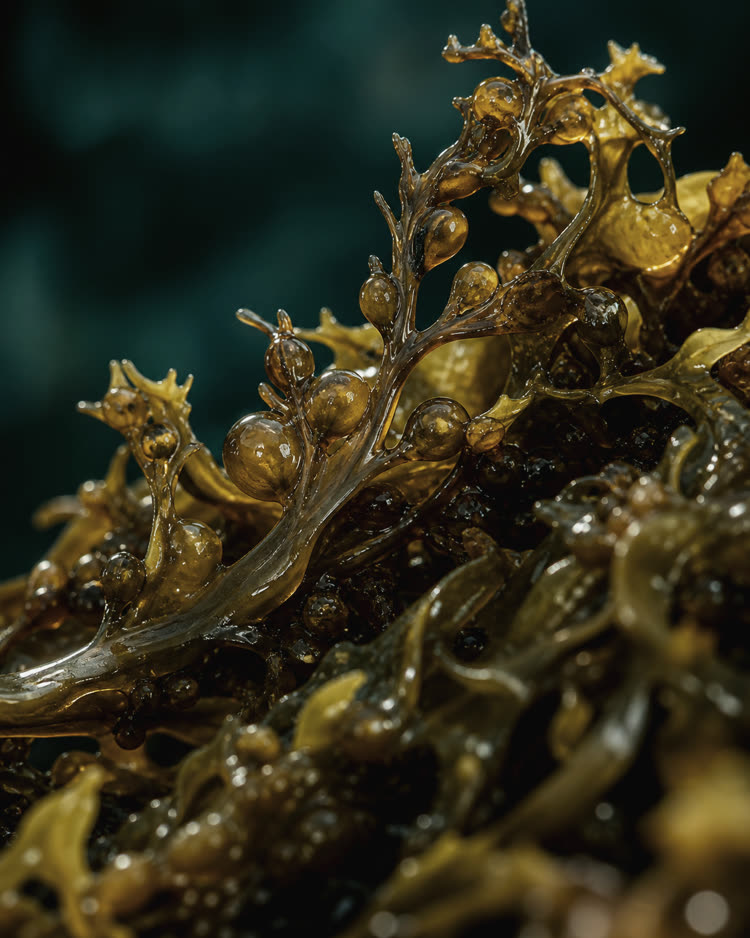
Sargassum and other macroalgae carry water, lipids, minerals and organic polymers, a profile that Salacia converts thermochemically without a drying step.
Sargassum and other macroalgae carry a distinct biochemical profile: water content, lipids, minerals, and organic polymers that make them candidates for thermochemical conversion. What appears as waste is, in fact, feedstock.
Modern economies depend on engines, transport systems, storage networks, and industrial logistics designed around liquid fuels. Replacing all of that infrastructure overnight is neither feasible nor financeable - but leaving it unchanged is not an option either.
Economic development requires abundant, reliable energy. Fossil fuels still dominate that demand despite their environmental cost.
Terrestrial biomass faces unavoidable ceilings: finite arable land, direct competition with food production, and constrained scalability.
Real-world decarbonization must work with the transport, storage, and industrial systems already in place - or it will not happen at scale.
Salacia is developing a thermochemical process that converts wet macroalgae, primarily sargassum, into renewable fuels and co-products compatible with existing engines, transport systems, storage networks and industrial logistics.
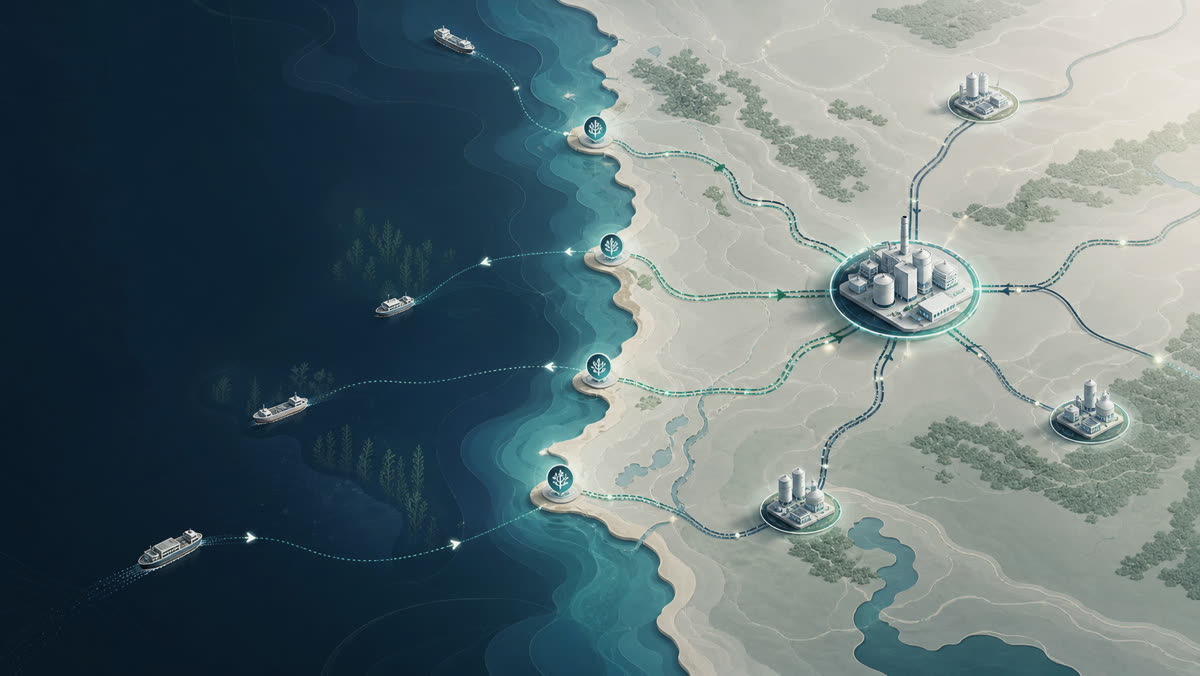
Coastal partners collect sargassum at sea, before it lands, and on the shore, within hours of stranding, while it is still fresh. Conditioning then prepares it for the reactor: sand and debris are removed and the feed is brought to a consistent state, so that a biomass that varies with the season, the coast and the day arrives at the process as one standard material.
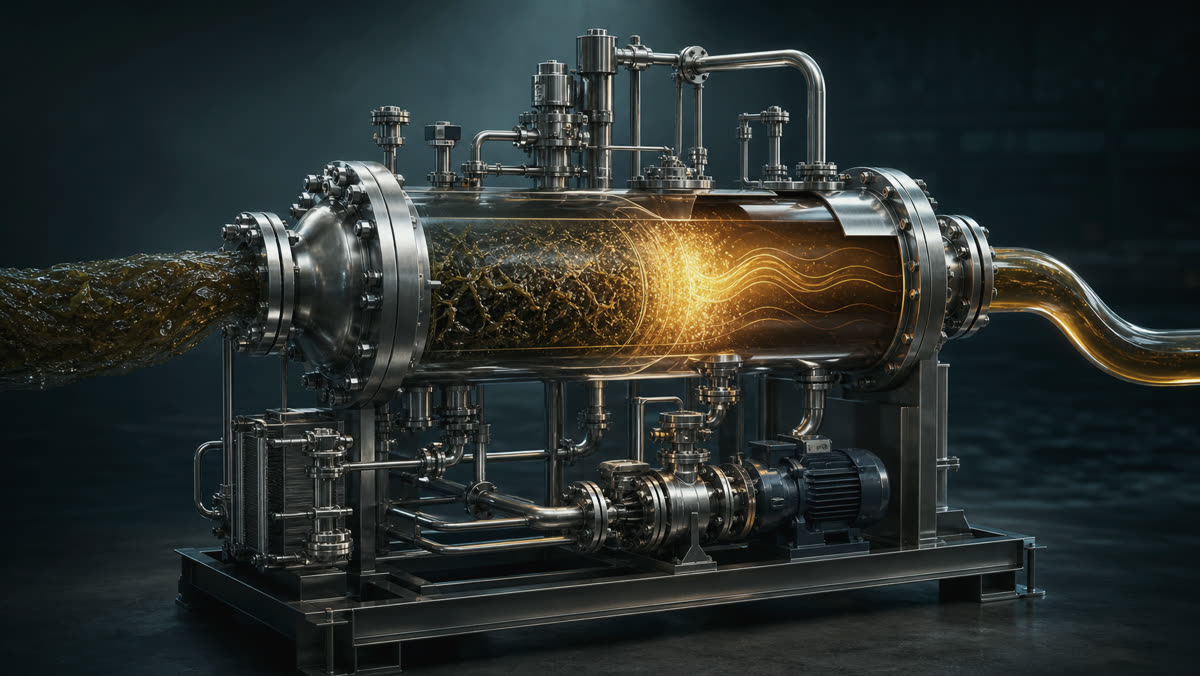
The conditioned seaweed goes into the reactor with its water. Under controlled temperature and pressure, the organic matter breaks down into liquid fuel precursors, an aqueous phase and solid residues, in a single step that needs no drying. The conditions are chosen for marine feedstock: they cope with the salt, they keep the heavy metals away from the fuel path, and they use the water fraction rather than fighting it.
Sargassum takes up salts and heavy metals from seawater. The first conversion step keeps them out of the fuel path while the valuable molecules are transformed, and the large water fraction is recycled within the process or reused by other industries.
The liquid fractions are upgraded and refined, the way a refinery treats crude oil, into fuels that meet existing specifications: diesel-like fuels for road fleets first, marine fuels next and, once the route is qualified, aviation fuel. Each market has its own certification path, which the roadmap sequences rather than promises at once.
This compatibility is deliberate. By producing drop-in fuels rather than requiring entirely new infrastructure, Salacia enables near-term decarbonization without waiting for the replacement of the systems modern economies depend on.
Beyond the technology itself, Salacia is designing a broader lifecycle-based economy - one in which waste is minimized and resources are systematically reused, recaptured, retransformed, and revalorized. The goal is not only to reduce carbon intensity but to restore resilience and autonomy to strategic sectors.
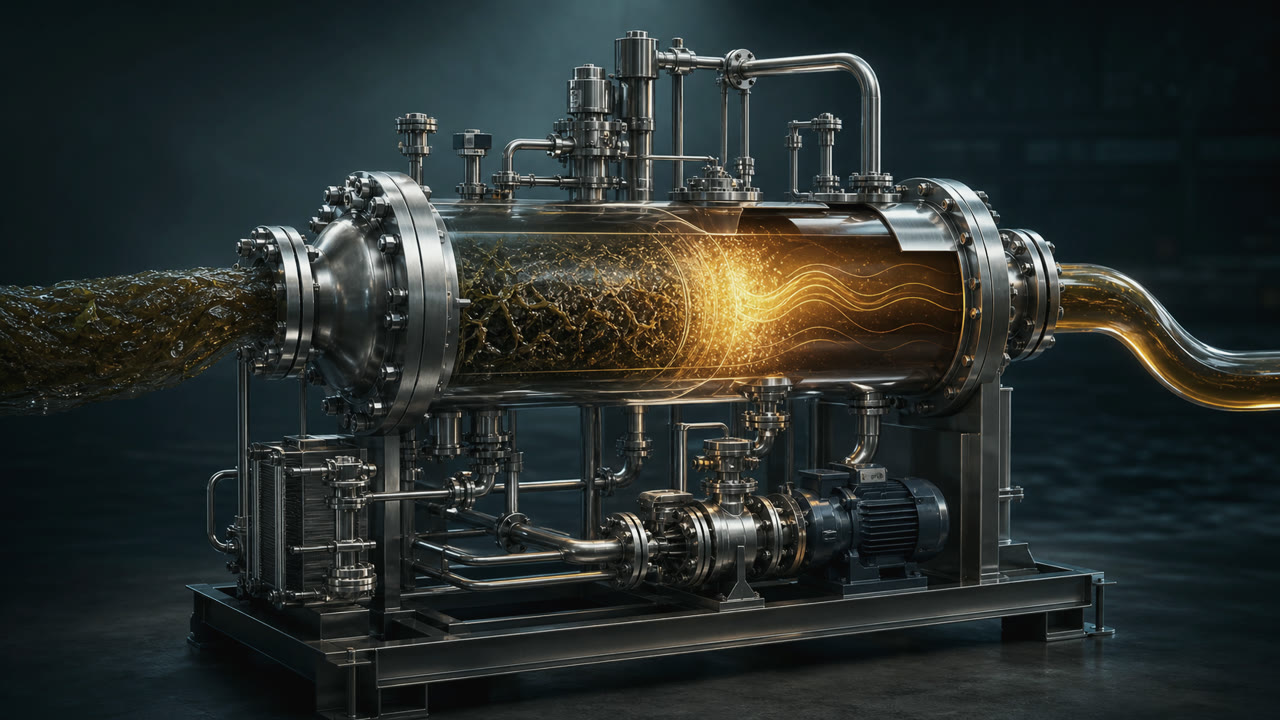
Our process centers on thermochemical conversion: controlled temperature and pressure conditions that break down complex organic matter into liquid fuel precursors. No drying step. No land requirement. Built for marine feedstocks. And built for what they bring with them: sargassum takes up arsenic and other heavy metals from seawater, and its salt content means chlorides - corrosive to ordinary equipment and unwanted in a fuel. Rather than treating that in extra stages, the first conversion step itself separates these elements from the fuel path while the valuable molecules are transformed, which also helps the energy balance of the process. The large water fraction that conversion produces is a resource of its own: it can be recycled within the process or reused by other industries.
Every stage of the marine biomass value chain is designed to minimize waste and systematically reuse resources - closing the loop at the industrial scale.
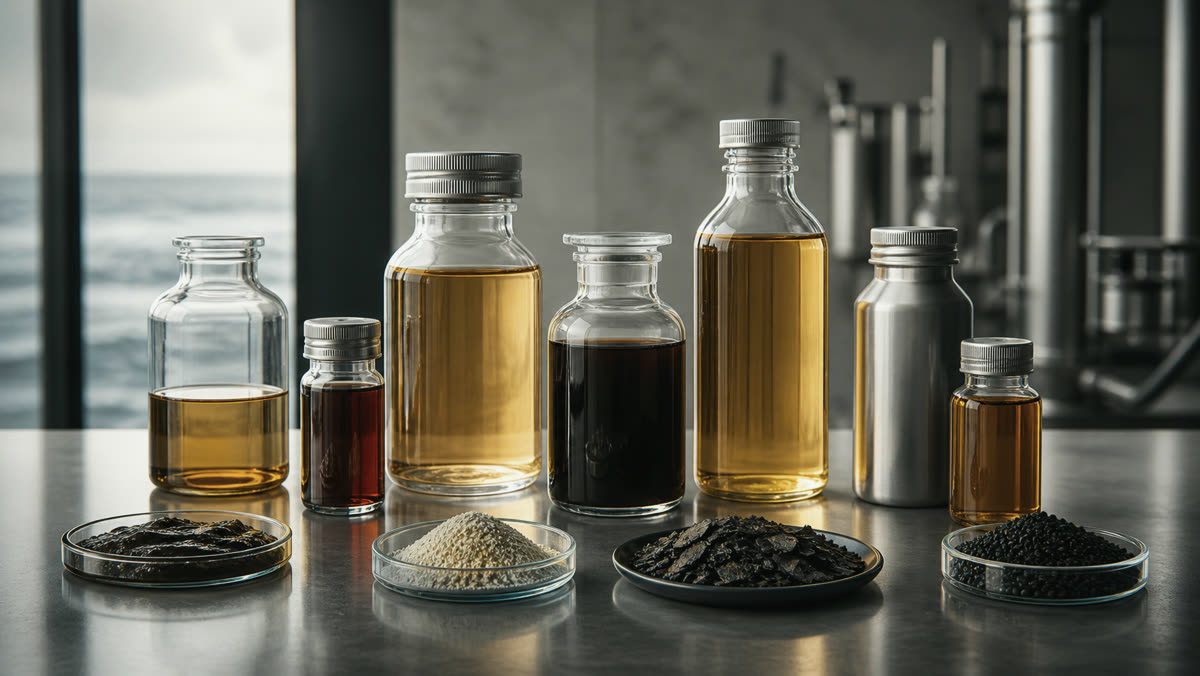
Several liquid fractions and solid co-products, each with its own market route.
The conversion process yields distinct liquid fractions - bio-crude precursors, aqueous phase co-products, and solid residues - each with potential market pathways across aviation, maritime, and road transport.
Technical excellence must be matched by regulatory alignment. Salacia integrates certification and compliance into its development roadmap from the earliest phases.
Reaching commercial markets requires more than technical proof. Salacia’s roadmap integrates certification pathways, regulatory alignment, and standards compliance from early development - ensuring outputs can meet the requirements of aviation, maritime, and road fuel specifications.
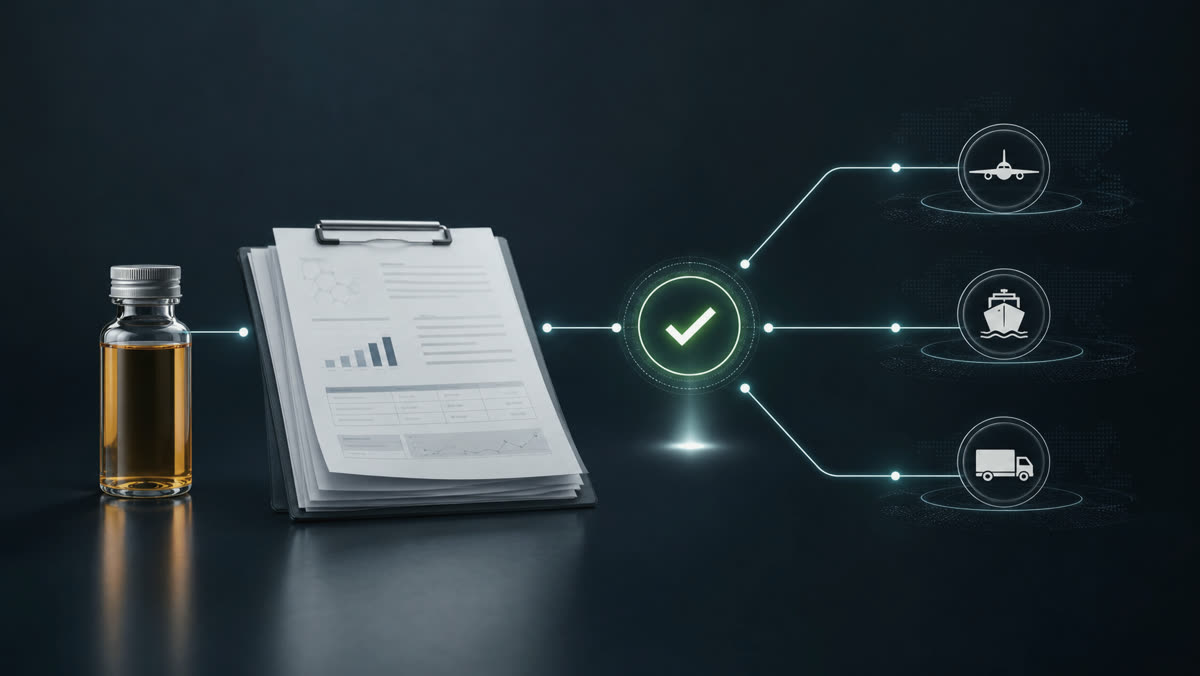
We share process data, sample analyses and certification progress with qualified partners under a non-disclosure agreement (NDA).
Request a technical briefing